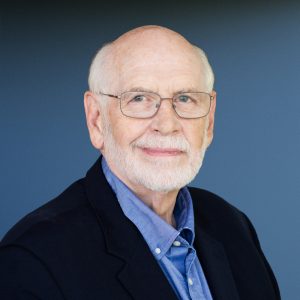
 As I approached the restaurant counter, the friendly cashier smiled and, with great enthusiasm, exclaimed, “How are you doing today, young man?” Innocent enough, I know. But I am also quite aware that I am not a “young man.” Every morning my joints and my mirror remind me of that fact, and those reminders are reinforced frequently by my grandchildren’s humorous quips as I try to keep up with them as they run down the hall.
I do not want to make more of the “young man” exchange than it deserves, although it happens quite often. But I would argue it has significance far beyond the moment. I think it reflects our society’s discomfort with facing the realities of aging. Somehow, by calling an aging man “young,” there is a sense that we have diffused his assumed discontent with growing older. Or perhaps it hides our own discomfort with the reality that, with each passing day, we are aging.
I would argue that this fear, or at least an unwillingness to accept the reality of our own aging, plays out in ways that are far more insidious and damaging than my relatively innocuous exchange with the cashier. Ageism, or taking actions based on age-related stereotypes, pervades many aspects of our lives—from being inundated by commercials that extol the virtues of being young and beautiful to our social interactions. But perhaps the place where ageism is most harmful is in the deliberation and enactment of public policy.
Clearly, ageism is a societal problem, but how it plays out in our lives in central Virginia is worth understanding and addressing. Currently, there are over 67,000 individuals age 60 or over in the Richmond region, and by 2030, one out of every four residents of our area will be over 60 years of age. That demographic reality has massive implications for our older adult neighbors and for everyone in the region. So, the question becomes: how do we respond?
With that question in mind, over the past year, with the support of the Richmond Memorial Health Foundation (RMHF), I set out to better understand the lives of older adults in our region. To do so, I culled through the data, spent time talking with staff members of organizations providing services to older adults, and engaged in enlightening conversations with older adults in the community.
Before jumping into the details of what I learned, let me offer two broad conclusions. First, it quickly became obvious that we have a number of excellent nonprofit and government entities serving older adults in the region—providing high-quality direct services, crafting opportunities for collaboration, and formulating advocacy strategies. But I also learned that, despite these strong providers, we are alarmingly far behind in our ability to respond at scale to the needs of the rapidly growing older adult population.
Given that assessment, let me take you along on my learning journey and offer some thoughts about where we need to invest our energies.
As I mentioned at the outset, much of our social and political response to our aging society is driven by myths and stereotypes. To change that mindset, we need to build a better understanding of who our older adult neighbors are, the realities of aging in our own lives, and how the lives of older adults are bound up in the lives of everyone in the community. Several of the people I talked to highlighted the tendency of many young and middle-aged people to see older adults as a burden on society. But in my conversations, it was consistently pointed out that the opposite is often true.
Study after study shows that older adults are vital players in civic life. Many remain key employees. Even more sustain our community’s civic infrastructure as volunteers. Others serve as caregivers, both for their peers and for children and grandchildren. As highlighted in Older Adults and Volunteerism: A Vital Social Justice Issue, older adults are not just participants in community life—they are essential to it.
But there is also no denying that growing older brings physical and cognitive changes that can negatively impact quality of life and require a variety of supports. If those supports are unavailable or insufficient, challenges to health and quality of life can arise. Here are a few statistics that point to the challenges faced by many older adults in the Richmond region:
- 67,000 live with chronic health conditions, often requiring assistance with the activities of daily living.
- Over 65,000 live alone, putting them at risk of loneliness and isolation.
- Over 56,000 struggle with housing instability, made worse by skyrocketing housing costs and contributing to the rise in older adult homelessness, as documented in Homelessness on the rise in Richmond region’s older population.
- Over 25,000 face food insecurity, struggling to access and afford quality food.
- 19,000 live below the federal poverty line, and tens of thousands more live in economic peril.
So, what does this data translate to in the lives of older adults? The people I talked to—both service providers and older adults themselves—were nearly unanimous in identifying three pressing issues:
Housing
Who among us does not hope to spend our later years in the comfort of our own home or, at least, in a familiar community? Yet nearly everyone I spoke with pointed to housing as the greatest challenge. Rising rents, limited affordable options, and the need for home modifications all threaten stability. Nationally, this challenge is well documented in Housing: Often Overlooked but a Critical Pillar for Older Adults.
 Caregiving
Caregiving is a critical component of the long-term care system. Caregivers make it possible for older adults to avoid institutionalization and age in place. Yet building a robust caregiving workforce remains a challenge, particularly as Medicaid reimbursement levels fall short of covering the full cost of care. The growing demand for caregivers in Virginia is highlighted in Aging at home drives growing demand for Virginia caregivers. In many cases, families are left to fill the gap—often at significant financial and emotional cost.
Transportation
Those I spoke with repeatedly emphasized the challenge of accessing transportation. Transportation is a vital resource for older adults, enabling access to healthcare, groceries, social engagement, and more. It is also essential to reducing isolation and supporting the caregiving workforce.
Beyond these issues, additional challenges include navigating the healthcare system, access to technology, food insecurity, mental health, and financial instability.
So, how do we begin to address these challenges? I would suggest three actions:
- Defend the programs and policies that are working—and transform those that are not.
- Change the prevailing narrative about aging.
- Build advocacy muscle to press for change.
While I will discuss each individually, it is only through integrating these efforts that we will achieve the scale of change required.
#1 Defend and Transform
Advocates, policymakers, service providers, older adults, and the community as a whole must do everything in their power to preserve the existing successful programs for older adults. The region is blessed with a number of high-quality providers of services to older adults—programs like Circle Center Adult Day Services, Family Lifeline, Jewish Family Services, Project: Homes, and the many services of the Span Center[1] , just to name a few. But despite their good work, all of these organizations are under-resourced, and demand for their services often far exceeds their capacity.
It is easy to see why proposals to weaken or dismantle an already overburdened system would have significant consequences—not only for older adults, but for the community writ large. Reductions in home and community-based services will place more demands on the health system; Medicaid cuts will result in less access to paid caregivers, increasing the burden on families to provide direct support; and rising housing costs will result in displacement, pushing more older adults into untenable housing situations—or potentially onto the streets.
While it is absolutely critical to support and expand existing successful programs, simply preserving the current system cannot be the end goal. As a result of the current rethinking of federal and state funding responsibilities, we may have a rare opportunity to radically reform the systems that we know all too well do not serve everyone—and, sadly, too often do not serve everyone because that is exactly what they were designed to do.
As a result, any effort to redesign and transform our systems must start with two guiding principles: equity and inclusion. Whatever we redesign must guarantee equal access and ensure that the voices of those most affected are an authentic part of decision-making processes. I would also suggest that a third guiding principle needs to be intersectionality—the recognition that older adults’ needs are intertwined with society as a whole, and therefore our response must be integrated into the broader housing, healthcare, transportation, and human services systems that ultimately serve people of all ages and abilities.
There are numerous entry points for this effort to better meet the needs of older adults, beyond ensuring that successful programs in the existing system are supported with policies and funding that reflect the true scale of need.
There are many entry points for this work. For example:
Building a true older adult services system
While the region has an aging services organizing entity, the Span Center (the region’s federally designated Area Agency on Aging), there is a clear need for greater coordination across the full range of housing, health, transportation, and human service systems that impact older adults. Cross-sector models already exist, such as Fairfax County’s SHAPE the Future of Aging Initiative, which offer a glimpse of what more integrated approaches can look like.
Enhancing transportation systems
Based on my conversations, it is clear that transportation planning entities are beginning to focus more rigorously on how the various transportation modalities can better serve older adults. It is crucial that advocates be fully engaged in these deliberations. We must take advantage of this moment.
Undergirding caregivers
Caregivers are the linchpin of any system supporting older adults. Strengthening this workforce, both paid and unpaid, through increased funding, training transportation supports, and other supports must be a priority.

#2 Changing the Prevailing Narrative About Aging
We have long known that the older adult population is growing, yet we have failed to prepare adequately. One reason is our collective failure to fully value older adults.
We must do a better job of storytelling as a tool to change the prevailing narrative—highlighting both the contributions of older adults and the challenges of aging. Policy change will not happen without political will, and political will will not emerge until myths are replaced with a more accurate understanding of older adults’ lives.
Encouragingly, groups like the Partnership for Positive Aging are beginning to shift the narrative. But sustained, community-wide effort will be required to reach a tipping point.
#3 Advocacy
Narrative change alone is not enough. It must be paired with action. Developing an advocacy strategy that matches the scale of the challenge will be essential to driving meaningful change, and it is critical that older adults be at the center both conceiving advocacy strategies and undertaking them.
Closing
I hope that, as you have traveled on this learning journey with me, you have gained a better understanding of the realities of growing older in our region. And I hope that understanding emboldens all of us to break down myths, challenge assumptions, and advocate for the systems changes needed to build a truly age-friendly community.
Even in these challenging times, opportunities for change will emerge. We must be ready to seize them and work together to build a better future—for our older adult neighbors, and ultimately, for ourselves.