 For our June entry in the Voices from the Region series, we are proud to highlight the extraordinary work of CrossOver Healthcare Ministry (CrossOver). Serving the community since 1983, CrossOver provides high-quality, compassionate healthcare to uninsured and Medicaid patients. As Virginia’s free and charitable clinics continue to weather the impact of steep funding cuts, CrossOver remains committed to carrying out its lifesaving mission.
After more than 40 years as a community mainstay, CrossOver staff have seen firsthand just how integral health, racial, and ethnic equity are to positive patient outcomes.
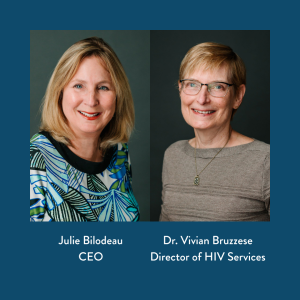
Chief Executive Officer, Julie Bilodeau and Director of HIV Services, Dr. Vivian Bruzzese spoke with us about health, racial, and ethnic equity in the context of their work at CrossOver and within the wider Richmond region, and how access to care, or the lack thereof, continues to drive community health.
It may come as no surprise that Bilodeau and Dr. Bruzzese share a common definition of what health, racial, and ethnic equity is and what it looks like in practice.
“It means that every person has access to the services that they need to be healthy,” they shared. “That socio-economic status, race, sexual orientation, or gender identity do not create barriers to getting care. In practice, this means listening to people, hearing their concerns, and addressing their needs.”
They added that this approach must also include seeking to understand a diverse array of cultural and religious beliefs and customs that might help guide and influence each patient’s treatment plan.
This approach is central to Dr. Bruzzese’s role, where listening has become an essential tool in her toolbox.
“I spend a lot of time with patients and really listen,” she said. “Many of our CrossOver patients are ignored or marginalized, so listening and letting them know that we genuinely care about them is really important. I want them to feel seen.”
Bilodeau agreed, stating that once that relationship has been established, it becomes easier to develop a treatment plan tailored to the unique needs of that patient.
“That’s the foundation that equity is based on,” she added.
But while Dr. Bruzzese and Bilodeau are committed to making progress and doing right by the diverse communities they serve, they both acknowledge that the larger, national picture presents additional challenges.
“The lack of emphasis on public health is moving us backwards, not forwards,” Bilodeau said. “Federal-level actions are having an impact on health in unexpected ways. Many of our patients are fearful of leaving home, leading to missed appointments and unfilled medications. This is directly affecting their health.”
Dr. Bruzzese, who oversees all of CrossOver’s HIV care, emphasized a different but related issue.
“It’s the stigma,” she explained. “There is still a stigma attached to living with HIV. This stigma continues to make my patients reluctant to access services that would improve their health.”
Yet even with this enduring and unfair stigma, Dr. Bruzzese is adamant that lifesaving progress continues to be made.
Specifically in the realm of HIV care, support, and understanding.
“We are seeing more collaboration among healthcare organizations who are providing care to the HIV population,” she said. “We are creating a system of care that will lead to greater health equity and better health outcomes for our community. Medications are also getting better, becoming easier to take, and with fewer side effects. This is leading to improved medication compliance and better health outcomes.”
But according to Bruzzese, this progress is being jeopardized by recent shifts in state and federal policy.
For Bilodeau, one of the biggest challenges is as basic as it is impactful: the need for additional capacity.
“Most experts believe that the number of low-income, uninsured patients will increase significantly over the next few years,” she explained. “We need a place for these individuals to receive care. We’re already at capacity at CrossOver.”
Bilodeau also pointed to the need for more culturally competent resources. As the Richmond area continues to diversify and new people begin to call the region home, she believes there is a growing need for more resources to serve these populations and help communicate with them effectively and respectfully, which will result in better health outcomes.
Ultimately, for both Dr. Bruzzese and Bilodeau, everything comes down to the work. Serving those who have been marginalized, providing them the high-quality care they deserve, and standing together to weather any and all obstacles to do so.
“Over the years, I have seen great progress made in treatment and addressing social determinants of health that make living with HIV so difficult,” Dr. Bruzzese said. “At the same time, I am sad to see the funding and resource challenges that our communities now face. But no matter what, we continue to collaborate and forge ahead, because we understand that it will take all of us working together to build a new system of care that provides access to the equitable care that everyone deserves.”